How Europe Can Turn Quantum Excellence into Industrial Value
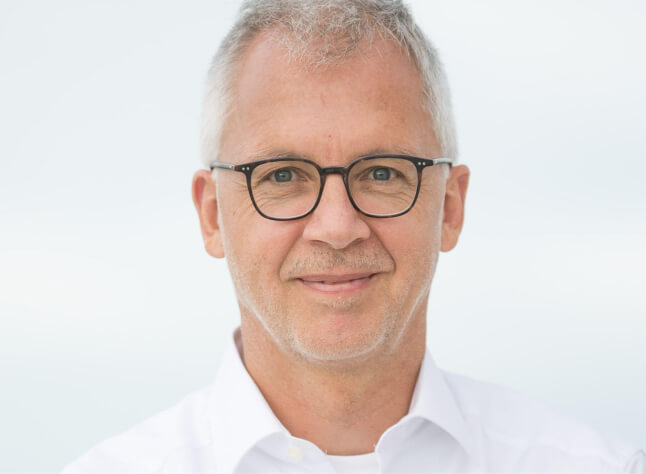
Quantum technologies are seen as a strategic field of the future in Europe. Where do you think Europe currently stands in the international landscape – and in which areas do you see particular strengths?
Europe is strong in quantum technologies, especially in research, in the number and quality of scientific publications, and in the education of skilled professionals. Europe has also developed a substantial start-up ecosystem. Where Europe still needs to catch up is in scaling start-ups and therefore in financing them. European investment capital still prefers to go to the US rather than stay in Europe.
QuIC represents companies across the entire European quantum value chain. Which technological developments and market segments are currently gaining the most momentum?
We see dynamic developments across all quantum technologies and throughout the value chain. Because a particularly large amount of funding is currently flowing into quantum computing hardware companies, there is especially strong momentum there, as well as in the development of quantum error correction methods.
Where do you currently see the most convincing examples of application-oriented quantum technologies in Europe moving towards market readiness and industrial use?
Expectations of a technological transformation driven by quantum computing are very high, and there are strong indications that such disruption will indeed take place. However, this will be a medium- to long-term development. At the moment, we still do not have practical benefits from quantum computers. The technical maturity is not there yet, even though the quantum computing ecosystem is making major progress and many useful applications are beginning to emerge. Other quantum technologies, such as quantum communication and quantum sensing, are more mature, and we are already seeing first applications and markets.
Which user industries do you believe will benefit most from quantum technologies in the coming years – and why are areas such as medical technology, aerospace, defence and AI particularly relevant at the moment?
That is still difficult to say at this stage. In quantum communication, the focus is currently on secure communication. But we are also seeing steps towards a quantum internet that will connect quantum computers “in a quantum way” and also integrate quantum sensors. Quantum sensors will help us advance medical diagnostics, navigation and object detection. As far as quantum computing is concerned, materials science and quantum chemistry are probably the closest to practical impact. It will become possible to develop new materials and chemistry more specifically and more quickly.
AI has two aspects in this context. First, AI will help us develop quantum technologies more quickly. Second, there is hope that quantum computers could accelerate certain aspects of AI or make them more efficient and cost-effective.
Europe is investing heavily in quantum technologies, while international competitive pressure is increasing. What needs to happen now for Europe to turn technological excellence into industrial value creation and global competitiveness?
Several things need to happen. Individual start-ups must grow significantly. We need internationally recognised stars among Europe’s quantum companies, and we must also protect our innovative companies from being sold off to other regions of the world. To achieve that, their financial base must be strengthened.
Global competitiveness also requires sovereignty. Europe needs to retain control over the central elements of the value chain. Then, of course, we need applications that will be interesting and beneficial for future customers. If we cannot create value for future customers, there will be no market for our quantum technologies.
From QuIC’s perspective, can you point to a few concrete figures, developments or trends that show how the European quantum market is evolving – for example in terms of investment, companies, technological maturity or industrial demand?
Regarding the investment challenge, there are figures from McKinsey showing that between 2001 and 2023, investments in US quantum technology start-ups were almost three times higher than in EU start-ups. If you look only at private capital, the gap is nearly a factor of six. It is likely that the figures have become even less favourable for the EU since 2023.
QuIC is a partner of Quantum Effects 2026. From your perspective, what role do platforms such as Quantum Effects play for the visibility and further development of the European quantum ecosystem?
Platforms such as Quantum Effects play an important role in connecting the actors within the ecosystem, showcasing current technological developments and helping interested non-specialists understand both the possibilities of the technology and the current state of play.
For QuIC, the importance of such platforms goes even one step further: they give our members the opportunity to make their work and innovations visible and to position themselves actively within the European quantum ecosystem. Through our collaboration with Quantum Effects, we help create a platform where companies, research institutions and other stakeholders can exchange ideas and form new partnerships.
zurück zur Übersicht