Communal food
![[Translate to English:]](/intergastra/fileadmin/media/02-programm/Header/ig-26-header-gemeinschaftsverpflegung-1050x320.png "Communal food")
Sustainability and climate protection are a must nowadays – in communal food too. The desire for a menu, which satisfies these needs, does not only come from guests but also from within the company. Operators of canteens and refectories must also react to this in the same way as caterers in order to compete on the market.
Focus on the future of catering in schools and kindergartensINTERGASTRA 2026 focused on the topic of catering in schools and kindergartens – since the provision of meals for children in kindergartens and schools is a task for society as a whole that directly affects millions of families. LunchLab was an innovative platform on which existing structures could be questioned and new viable methods for communal food could be developed. The objectives were to provide inspiration, promote dialogue and jointly develop solutions. |
LunchLab: more than just products – the big picture in mindLunchLab deliberately differed from traditional exhibitions. The focal points were not just products or technology, but primarily suitable overall solutions and field-tested processes. Visitors could look forward to a varied special area containing a stage programme and exhibition and dialogue elements. The discussed topics included quality, standards, sustainability, financing, digitalisation, recruitment of skilled workers and the active involvement of children and parents in catering. A large number of partners shared their experiences and showed how innovative approaches function in practice. |
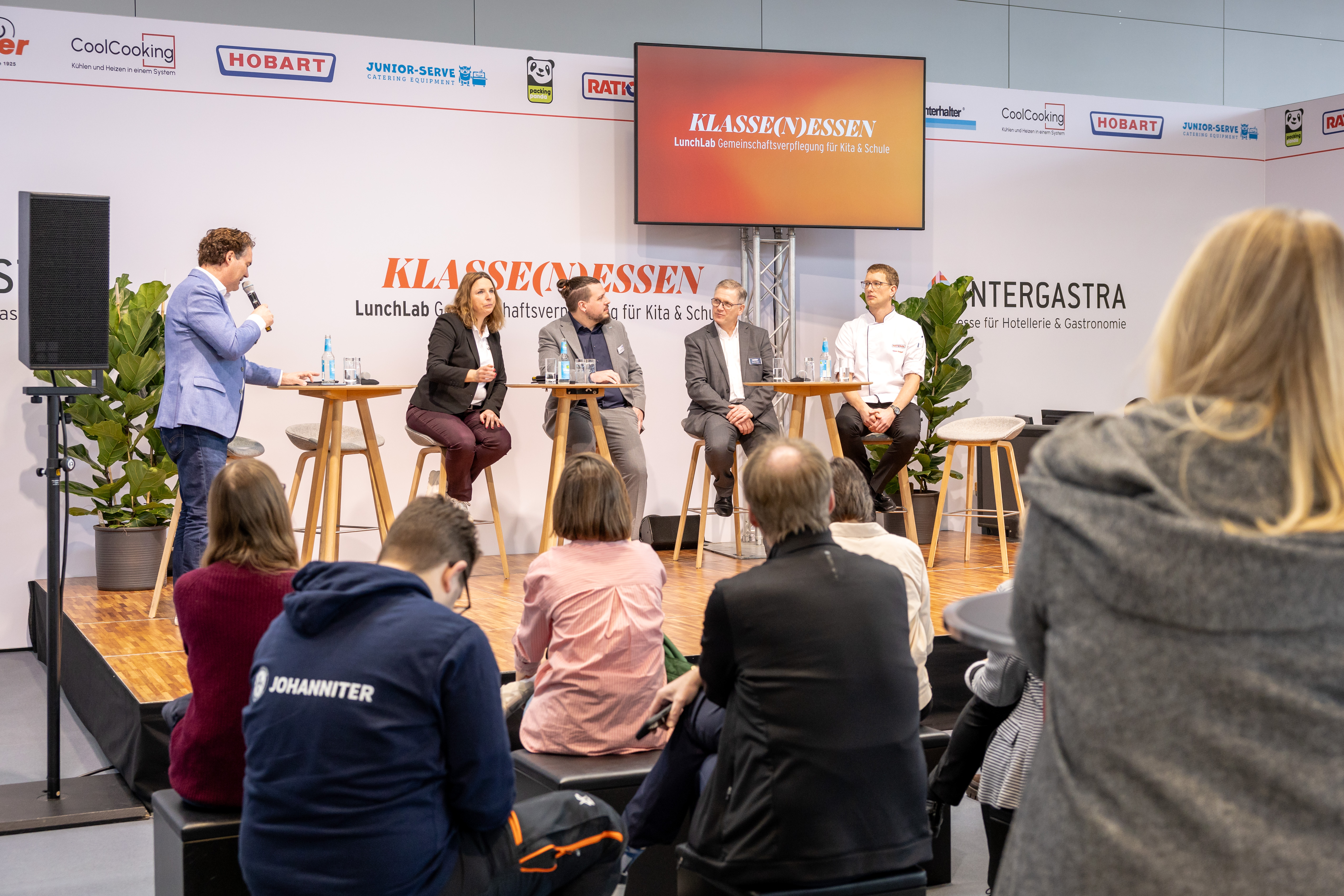
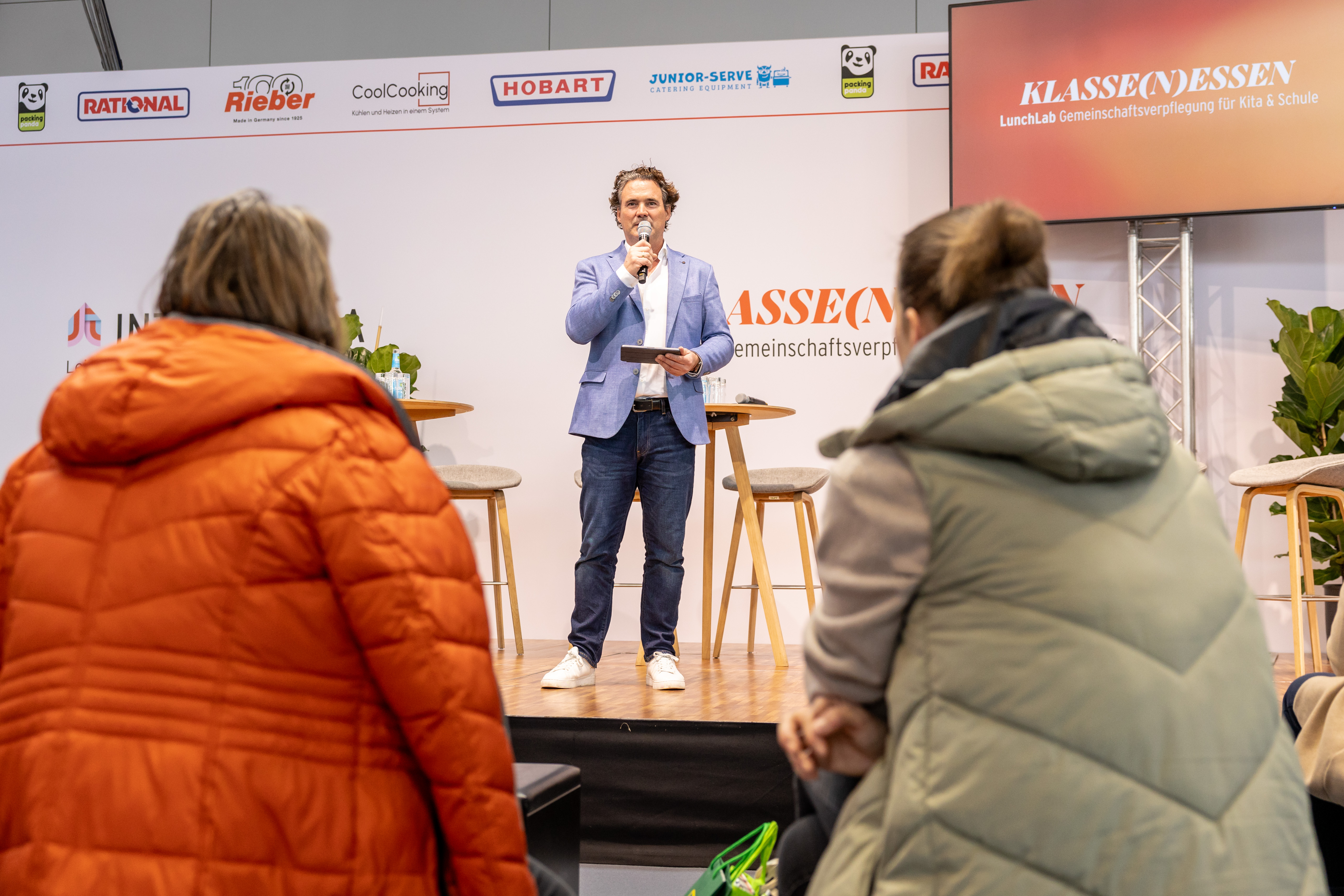
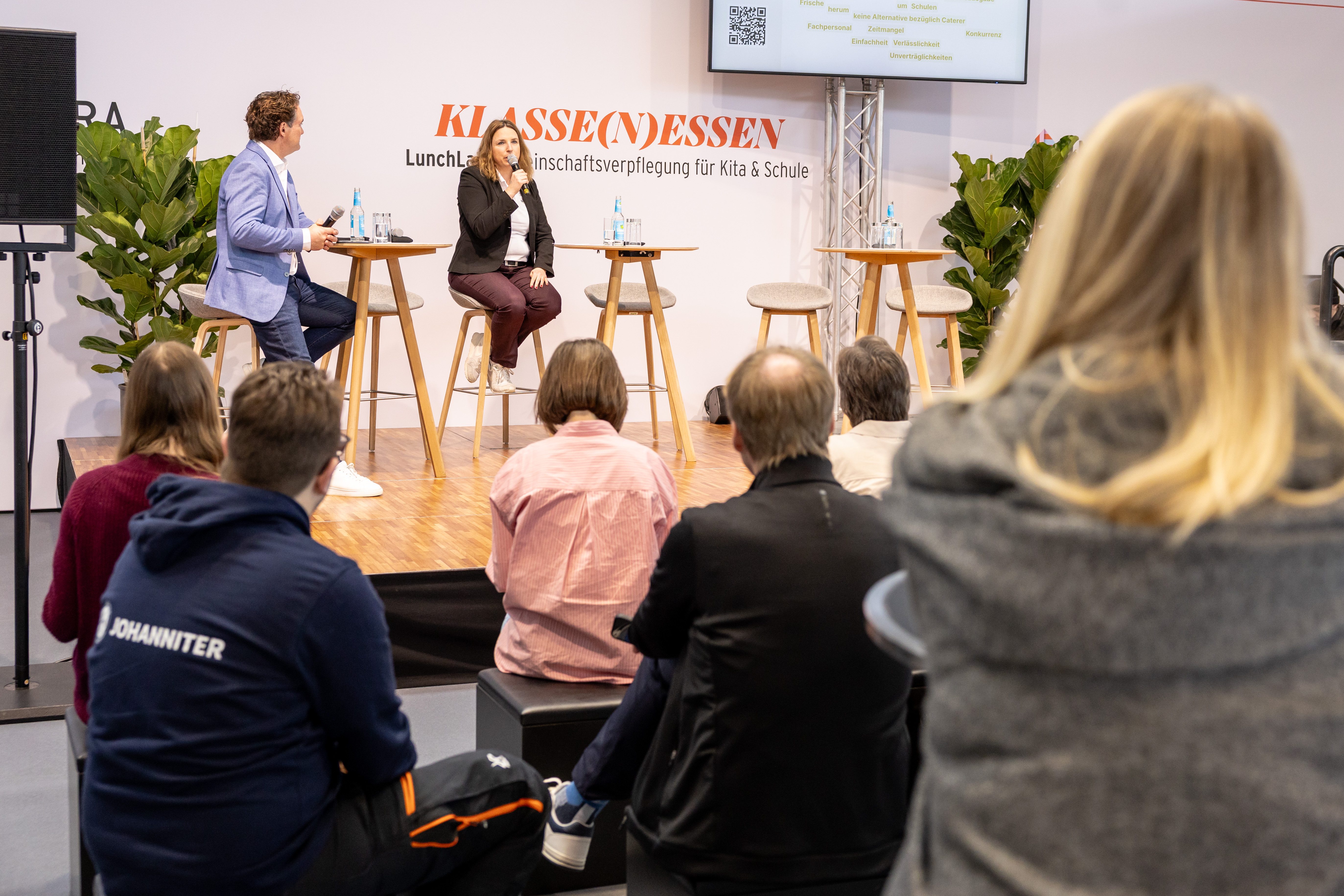
Process optimisation in LunchLab: efficient and future-orientedThe focal point of LunchLab was process optimisation of existing solutions for communal food. Between cost pressure, the shortage of skilled workers and increasing requirements regarding sustainability, LunchLab showed how processes can be designed more efficiently, how resources can be used purposefully and how quality can be ensured. In the informative special area you would not encounter a show featuring just technology or products, but could instead gain a practical overview of the entire topic – from planning and organisation through to everyday eating culture. LunchLab focused on the big picture: structures, processes, attitude – and specific ways to successfully achieve good catering under real conditions. A central element of the special area was a daily stage program with a panel discussion in which partners and experts discussed practical examples and a variety of solutions. These included: Cool Cooking, DZG, Edgar Fuchs, foove, Hobart, Jam Verlag, Junior Serve, Lern BW, Packing Panda, Profi-table, Rational, the city of Ulm, and Winterhalter. |
- Programme FOKUSGemeinschaftsverpflegung Hall 3 – Stand 3D80 (in German)
- Highlights School Catering Congress and Municipalities Day
- Key topics
From 11:00 | Masterclasses from our partner companies |
13:00 | The dos and don’ts for a tailored approach to communal catering |
13:30 | Quality & Recommendations vs. Costs |
13:45 | From the idea to implementation |
14:00 | Finance & Tenders |
14:15 | Personnel & Participation |
14:30 | Digitalisation & Logistics |
14:45 | The Future of Communal Food – Ideas & Innovation |
From 15:00 | Masterclasses from our partner companies |
- Quality & standards: Practical implementation of DGE Standards, feedback systems, Cook & Chill.
- Sustainability & regionalism: Organic portions, CO₂ balances, seasonal menus, cooperation agreements with producers.
- Financing & contract awarding practice: Fair calculations, promotional programmes, tenders.
- Digitalisation & logistics: Tools for ordering, invoicing, menus, cold chain & transport.
- Shortage of skilled workers & personnel: Qualification, hygiene standards, cooperation agreements.
- Educational involvement: Eating culture, participation of children, nutrition education.
- Future of catering: Modular kitchens, mobile dispensing systems, refectories as social spaces.
- Practice pure: Empirical reports from communes, schools, kindergartens and companies.