Meldungen
From the lab to the production line: How research is shaping the electronics manufacturing of tomorrow
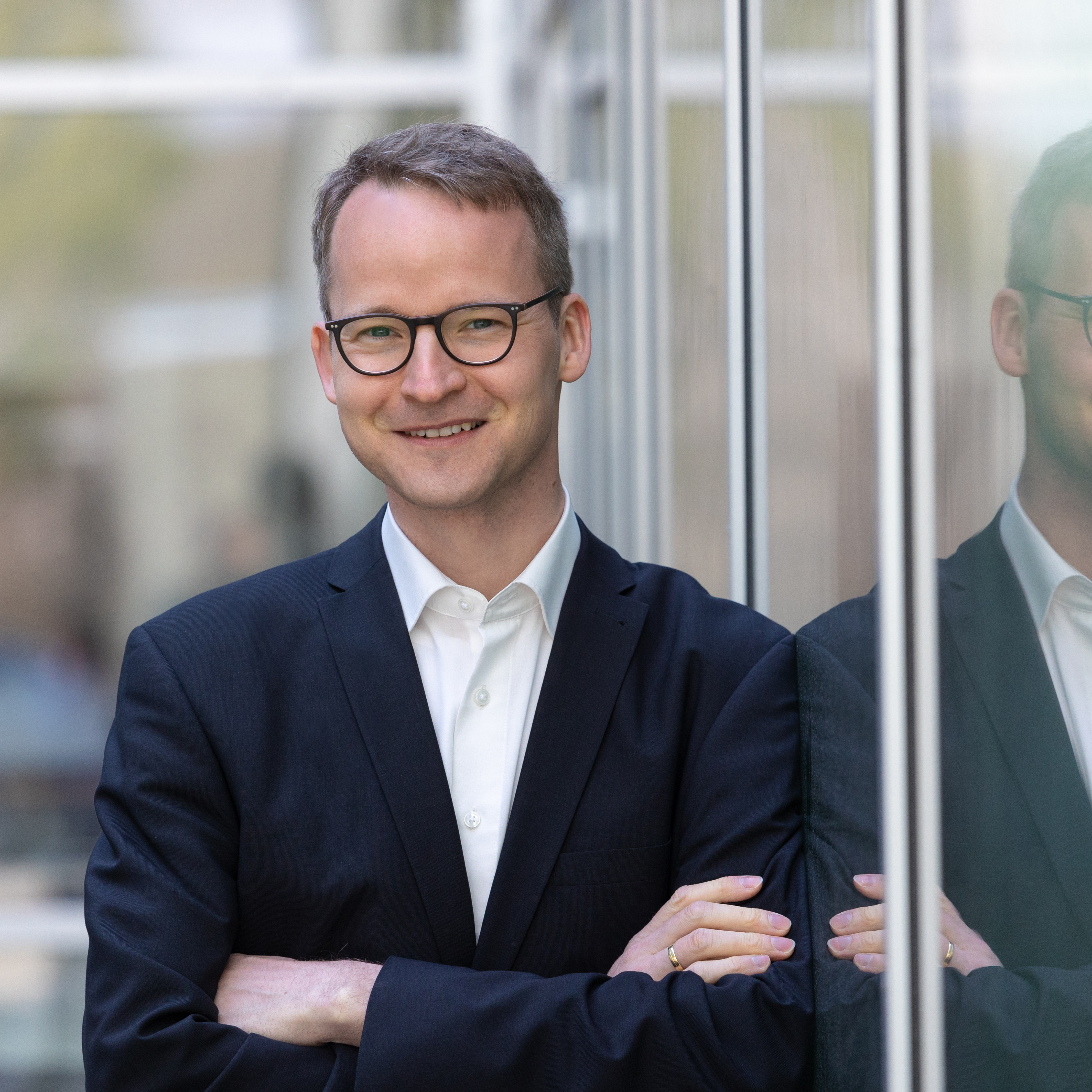
In an interview around six months ahead of EFX 2026, he explains why Hahn-Schickard has supported the new industry event from the outset, what technological levers he sees for the manufacturing of tomorrow, and what role EFX can play for the DACH region and the next generation of talent.
Mr Fritz, Hahn-Schickard has been a partner of EFX from the very start. What convinced you to support this new industry event for electronics manufacturing – and what do you personally expect from the 2026 premiere?
In times of global uncertainty, the topic of electronic packaging is becoming a critical factor for many companies in Germany. Whilst packaging and printed circuit board manufacturing languished for years as a supposedly ‘low-tech’ topic, it has recently become increasingly important not to neglect any link in the electronics production chain. As the saying still holds true: “No chips without packaging”, it was clear to us that EFX offers enormous opportunities here if we succeed in linking technology and application. That is precisely what I expect from the 2026 premiere.
Hahn-Schickard stands for applied research and technology transfer. Can you give an example of a research idea that has been turned into an industrially viable process or a finished electronic product – and what this means for the electronics manufacturing of tomorrow?
About seven years ago, a major German measurement technology company approached us looking for a partner for a specialised package suitable for high-frequency chips up to 50 GHz. We were able to offer a solution based on research results from 2016. Today, the package for the chip is in series production and we are expanding the underlying technology into a scalable package platform. Our focus here is on specialised applications and production volumes of less than 100,000 units per annum, as is typical for applications in the SME sector.
EFX focuses on the entire process chain and all aspects of miniaturisation – from components and printed circuit boards to packaging and testing. Where do you currently see the greatest technological opportunities, for example in advanced packaging, interconnect technology or new materials?
Direct chip packaging, specifically the integration of different chip technologies within a single system, offers very high future potential. The technical term for this is ‘heterointegration’, and another key buzzword is ‘chiplets’. The customer benefit lies in a more modular and therefore more resilient process chain, as well as in the ability to combine optimal performance with cost optimisation, including through the reduction of scrap. In particular, the sectors that are important for Germany – automotive, medical technology and automation technology – but also future-oriented sectors such as aerospace and high-performance computing, are benefiting from these latest technological innovations.
Electronics manufacturing is a key sector, particularly in the industrially strong south of Germany and in the DACH region. Where do you see the greatest opportunities, but also risks, for the region by 2030? And what role can platforms such as EFX play in this?
I see the greatest opportunities in the development and manufacture of innovative electronics for niche applications, for which SMEs in the DACH region are known worldwide. It is difficult to single out individual areas, but numerous so-called ‘hidden champions’ can secure their technological competitive advantage through innovative electronics, software and AI, thereby keeping both jobs and production in Europe. It follows logically that the manufacturing of these innovative electronics should also be organised in Europe.
I see EFX’s role as specifically connecting users from SME-dominated sectors with electronics manufacturing suppliers. On the one hand, users are increasingly realising that electronics manufacturing abroad is associated with ever-greater risks regarding supply security. Equipment manufacturers, on the other hand, must also understand the specific requirements for packaging in order to further develop production equipment for electronics manufacturing.
Sustainability, resource efficiency and the circular economy are becoming increasingly important in electronics manufacturing. At which points in the process chain do you see the greatest need for action – and what are you currently working on at Hahn-Schickard in this context?
Many of the materials used in electronics manufacturing are very difficult to recycle, simply because, for reasons of reliability and long-term durability of the electronics (keywords: service life and right to repair), composite materials and thermosets were used in the past. We cannot change these constraints of chemistry and physics. Nevertheless, we see some interesting candidates in the field of renewable raw materials that offer the potential to replace traditional materials, at least for applications with less stringent performance requirements. To be honest, however, there is still a long way to go. At Hahn-Schickard, for example, we are investigating the manufacture of printed circuit boards based on renewable raw materials.
The shortage of skilled workers is also clearly felt in electronics manufacturing. Hahn-Schickard works closely with universities and young talent. What role does the training and development of the next generation play for your institute – and how can initiatives such as Young electroniX or the EFX Academy help to inspire more young people to take an interest in electronics manufacturing?
Any initiative that makes it clear to young people that the smartphone they use every day as a matter of course had to be developed by engineers, and that the manufacture of these devices involves incredibly exciting technical challenges, is welcome. We at Hahn-Schickard therefore train young people ourselves in the necessary hardware skills – from precision mechanics to PhD level. In addition, we regularly provide the next generation with first-hand insights by opening our laboratories to them.
zurück zur ÜbersichtFrom the lab to the production line: How research is shaping the electronics manufacturing of tomorrow
In an interview around six months ahead of EFX 2026, he explains why Hahn-Schickard has supported the new industry event from the outset, what technological levers he sees for the manufacturing of tomorrow, and what role EFX can play for the DACH region and the next generation of talent.
Mr Fritz, Hahn-Schickard has been a partner of EFX from the very start. What convinced you to support this new industry event for electronics manufacturing – and what do you personally expect from the 2026 premiere?
In times of global uncertainty, the topic of electronic packaging is becoming a critical factor for many companies in Germany. Whilst packaging and printed circuit board manufacturing languished for years as a supposedly ‘low-tech’ topic, it has recently become increasingly important not to neglect any link in the electronics production chain. As the saying still holds true: “No chips without packaging”, it was clear to us that EFX offers enormous opportunities here if we succeed in linking technology and application. That is precisely what I expect from the 2026 premiere.
Hahn-Schickard stands for applied research and technology transfer. Can you give an example of a research idea that has been turned into an industrially viable process or a finished electronic product – and what this means for the electronics manufacturing of tomorrow?
About seven years ago, a major German measurement technology company approached us looking for a partner for a specialised package suitable for high-frequency chips up to 50 GHz. We were able to offer a solution based on research results from 2016. Today, the package for the chip is in series production and we are expanding the underlying technology into a scalable package platform. Our focus here is on specialised applications and production volumes of less than 100,000 units per annum, as is typical for applications in the SME sector.
EFX focuses on the entire process chain and all aspects of miniaturisation – from components and printed circuit boards to packaging and testing. Where do you currently see the greatest technological opportunities, for example in advanced packaging, interconnect technology or new materials?
Direct chip packaging, specifically the integration of different chip technologies within a single system, offers very high future potential. The technical term for this is ‘heterointegration’, and another key buzzword is ‘chiplets’. The customer benefit lies in a more modular and therefore more resilient process chain, as well as in the ability to combine optimal performance with cost optimisation, including through the reduction of scrap. In particular, the sectors that are important for Germany – automotive, medical technology and automation technology – but also future-oriented sectors such as aerospace and high-performance computing, are benefiting from these latest technological innovations.
Electronics manufacturing is a key sector, particularly in the industrially strong south of Germany and in the DACH region. Where do you see the greatest opportunities, but also risks, for the region by 2030? And what role can platforms such as EFX play in this?
I see the greatest opportunities in the development and manufacture of innovative electronics for niche applications, for which SMEs in the DACH region are known worldwide. It is difficult to single out individual areas, but numerous so-called ‘hidden champions’ can secure their technological competitive advantage through innovative electronics, software and AI, thereby keeping both jobs and production in Europe. It follows logically that the manufacturing of these innovative electronics should also be organised in Europe.
I see EFX’s role as specifically connecting users from SME-dominated sectors with electronics manufacturing suppliers. On the one hand, users are increasingly realising that electronics manufacturing abroad is associated with ever-greater risks regarding supply security. Equipment manufacturers, on the other hand, must also understand the specific requirements for packaging in order to further develop production equipment for electronics manufacturing.
Sustainability, resource efficiency and the circular economy are becoming increasingly important in electronics manufacturing. At which points in the process chain do you see the greatest need for action – and what are you currently working on at Hahn-Schickard in this context?
Many of the materials used in electronics manufacturing are very difficult to recycle, simply because, for reasons of reliability and long-term durability of the electronics (keywords: service life and right to repair), composite materials and thermosets were used in the past. We cannot change these constraints of chemistry and physics. Nevertheless, we see some interesting candidates in the field of renewable raw materials that offer the potential to replace traditional materials, at least for applications with less stringent performance requirements. To be honest, however, there is still a long way to go. At Hahn-Schickard, for example, we are investigating the manufacture of printed circuit boards based on renewable raw materials.
The shortage of skilled workers is also clearly felt in electronics manufacturing. Hahn-Schickard works closely with universities and young talent. What role does the training and development of the next generation play for your institute – and how can initiatives such as Young electroniX or the EFX Academy help to inspire more young people to take an interest in electronics manufacturing?
Any initiative that makes it clear to young people that the smartphone they use every day as a matter of course had to be developed by engineers, and that the manufacture of these devices involves incredibly exciting technical challenges, is welcome. We at Hahn-Schickard therefore train young people ourselves in the necessary hardware skills – from precision mechanics to PhD level. In addition, we regularly provide the next generation with first-hand insights by opening our laboratories to them.
zurück zur Übersicht